How to Choose the Right Bolts for Your Project?
Choosing the right bolts for your project is crucial. According to industry expert John Smith, “Using the right bolts can make or break the integrity of your structure.” Bolts come in various types, materials, and sizes. Each project has unique requirements, and understanding these nuances is key.
Many overlook the importance of bolt specifications. A mistake here can lead to failures. For instance, using steel bolts in a marine application without proper coatings can lead to rust. It’s important to consider the environment where the bolts will be used.
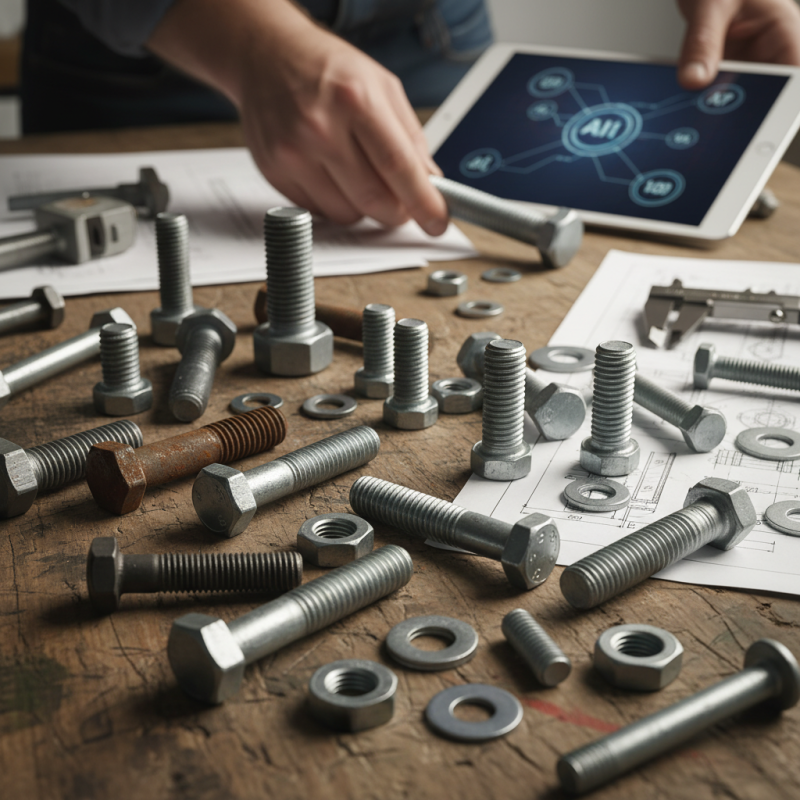
Furthermore, not all suppliers meet the same standards. When sourcing bolts, explore verified suppliers. Certifications like ISO and CE are important indicators of quality. As we look ahead, incorporating technology in procurement can streamline this process. Adopting AI, as seen at trade shows, can optimize supplier selection based on your precise needs.
Understanding Bolt Types: An Overview of Common Options
Choosing the right bolts for your project requires understanding the various types available. For example, there are hex bolts, carriage bolts, and lag bolts. Each type serves a specific purpose. Hex bolts are commonly used for heavy-duty applications. They have a hexagonal head and provide excellent grip.
Carriage bolts, on the other hand, are great for wood and provide a smooth surface. Their round head allows for easy insertion. Lag bolts, which have a sharp point, are perfect for anchoring in thick wood. They can hold a strong grip but require pre-drilling.
It's essential to also consider materials. Stainless steel bolts resist rust. However, they can be more expensive. Zinc-coated bolts, while cheaper, may corrode over time. Think about the environment your project will be in. Will it be exposed to moisture? Do you prefer strength or cost? Reflect on these questions carefully. Bolt selection can significantly impact your project's success.
Assessing Load Requirements: Shear and Tensile Strength Considerations
When choosing bolts for a project, understanding load requirements is crucial. Two important factors are shear and tensile strength. Shear strength refers to the maximum load a bolt can withstand before failing in shear. Typically, high-strength bolts can handle up to 120,000 psi in shear. This means they can support significant loads, but various factors influence their performance.
Tensile strength is equally important. It represents how much load a bolt can handle in tension before breaking. Common steel bolts exhibit tensile strengths ranging from 60,000 to over 200,000 psi. Using the right bolt ensures that it won’t stretch excessively or snap under pressure. However, relying solely on standard values may lead to mistakes. While generic data is helpful, specific project conditions can differ widely.
Considerations such as environmental factors and bolt material affect performance. For example, corrosion resistance can weaken a bolt over time, leading to failure. Also, installation techniques can influence bolt strength. Improper torquing can compromise their integrity. Engineers must conduct a thorough evaluation to ensure optimal choices for their applications. Ignoring these details can result in costly mistakes.
Load Requirements for Choosing Bolts
This chart illustrates the shear and tensile strength requirements for different grades of bolts, assisting in the selection process for various projects.
Material Selection: Choosing Between Steel, Stainless, and Other Alloys
When selecting bolts for a project, material choice is critical.
Steel bolts are a popular option due to their strength and durability.
They handle heavy loads well but can rust without proper coatings. This could be challenging if the bolts are used outdoors or in humid conditions.
Stainless steel offers an alternative with excellent resistance to corrosion.
It is ideal for marine environments and places exposed to moisture. However, it can be more expensive than regular steel.
If budget constraints are present, weighing the pros and cons is essential.
Other alloys present unique advantages. For instance, titanium bolts are lightweight yet strong.
They are suitable for aerospace applications. Yet, they may not be the best choice for general construction due to cost.
Each material comes with its own set of trade-offs. Reflecting on these can guide you to the best decision for your specific needs.
Coating and Corrosion Resistance: Factors Affecting Longevity and Performance
Choosing the right bolts for any project goes beyond size and thread type.
Coating plays a crucial role in how long bolts last.
There are various coating options available, such as zinc plating,
powder coating, and galvanizing.
Each method serves a different purpose, impacting corrosion resistance and overall durability.
Corrosion can weaken bolts significantly over time. Environments with moisture, salt, or chemicals are particularly harsh.
If the wrong coating is selected, even the best bolts can fail. This can lead to costly repairs and project delays.
It’s vital to assess the conditions where the bolts will be used.
Sometimes, even after careful selection, the chosen bolts may not perform as expected.
Overlooking small details can have big consequences.
Regular inspection and maintenance of bolts can extend their life.
It’s important to learn from these experiences and adapt strategies for future projects.






 Phone
Phone Send Email
 whatsapp
 Facebook
 Youtube