In the world of web design, effective navigation is crucial. Anchors play a vital role in enhancing user experience. They help users move seamlessly through content. Well-placed anchors guide visitors to relevant sections, making information easier to find. However, misuse of anchors can lead to confusion. Designers must balance anchor placement and user intent.
Creating a logical flow is essential. Each anchor should connect to meaningful content. If anchors are scattered without purpose, users may feel lost. Reflecting on user behavior can reveal areas for improvement. Regularly testing anchor functionality is a practice every designer should adopt. This ensures that links lead to the expected destinations.
Moreover, optimizing anchor text is key. Descriptive text encourages clicks and boosts SEO. However, overstuffed keywords may dilute clarity. It's important to find a balance. Designers must remain vigilant and ready to adjust. Learning from user feedback can enhance the effectiveness of anchors. Consistent evaluation will strengthen your web design strategy.

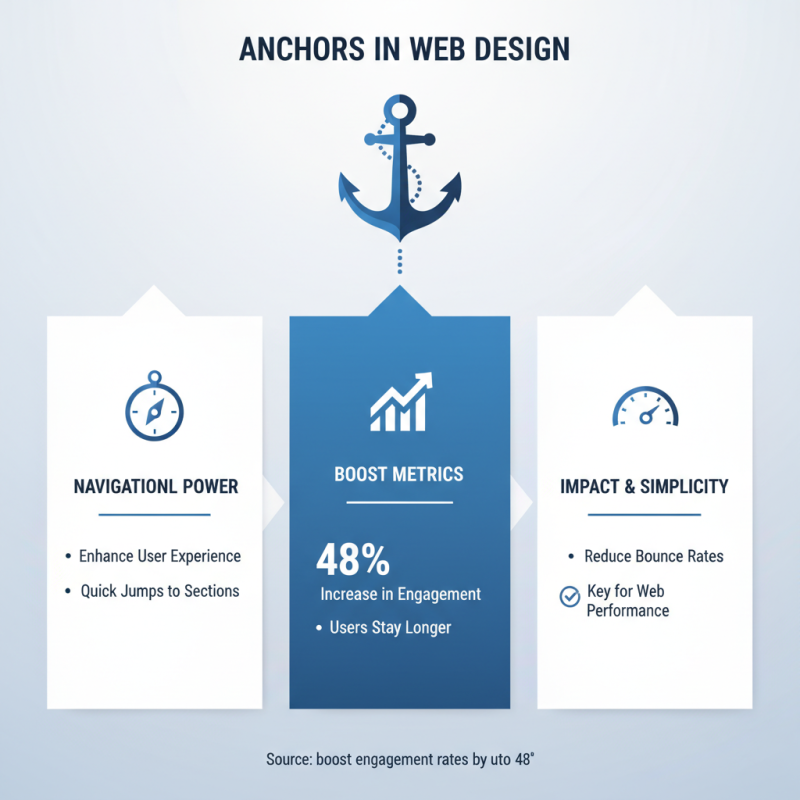
Anchors play a crucial role in web design, serving as navigational tools that enhance user experience. Research shows that effective use of anchors can boost engagement rates by up to 48%. When users can quickly jump to relevant sections, they stay on the page longer. This simplicity can reduce bounce rates, a key metric for assessing web performance.
However, while anchors improve usability, they must be strategically implemented. Using too many anchors may confuse users. According to a study by the Nielsen Norman Group, 58% of users struggle when navigating sites with excessive links. Clarity is paramount. Ensuring the anchor text is descriptive and not vague can enhance understanding. Take care to avoid jargon that may alienate users.
Additionally, mobile optimization is vital. With over 54% of web traffic coming from mobile devices, anchors need to function seamlessly across platforms. If they do not, users may feel frustrated. Constant testing is necessary to ensure that your anchors work correctly. A visitor's experience should never be left to chance. Regularly review analytics to identify potential pain points.

Choosing the right anchor text is crucial for both clarity and SEO in web design. Clear anchor text informs users what to expect when they click. It helps them navigate your site effectively. For example, instead of saying "click here," use descriptive phrases like "learn more about our services." This precision enhances user experience while improving search engine visibility.
Strategically selecting keywords for anchor text is an SEO best practice. Search engines read these words to understand page relevance. Overly generic anchor text can dilute this effectiveness. However, striking a balance between clarity and keyword optimization is challenging. Too many keywords may seem spammy. Aim for a natural flow, even if it means sacrificing some keyword density.
Reflecting on your anchor text choices can reveal areas for improvement. Regularly review analytics to assess how users engage with these links. Are your visitors navigating your site as intended? If not, reassess the effectiveness of your anchor text and consider adjustments. Your site's usability and search engine ranking depend on these details.
Anchor links are essential in web navigation. They improve user experience by facilitating easy access to different sections of a webpage. When implementing anchor links, clarity is key. Labels should accurately describe the destination. Use phrases like "Learn More" or "Jump to Section" to guide users effectively.
Accessibility should always be a priority. Ensure that anchor links are easily identifiable. Utilize contrasting colors or underlines to make them stand out. Keep them within reach on the page, so users don’t struggle to find them. It's worth noting that while anchor links are helpful, overusing them can lead to confusion. Strive for a balance between functionality and simplicity. Attention to detail can lead to a more satisfying browsing experience.
Navigation structure is another crucial aspect. Group related content under clear headings. This strategy helps users understand where they are. However, consider not overwhelming visitors with too many links. Fewer, well-placed links often outperform a cluttered design. Test your navigation frequently. Collect user feedback for continuous improvement.
Smooth scrolling anchors can significantly enhance user experience on websites. They allow users to navigate effortlessly from one section to another. This technique creates a seamless experience that keeps visitors engaged. However, overuse can lead to confusion. Users might feel lost if scrolling transitions aren't straightforward.
Effective implementation of smooth scrolling is key. Anchors should be strategically placed. Make sure each anchor has a clear purpose. Test the scroll speed to ensure it feels natural. Too fast, and users may miss important information. Conversely, if too slow, it may frustrate them. Attention to these details improves usability.
Visual cues are essential for guiding users. Consider incorporating animations or highlighting the active section. This helps users know where they are on the page. Feedback from real users can reveal if your design is effective. Gather insights and be willing to iterate. Improvement often comes from understanding the user’s journey through your site.
Optimizing anchors for both mobile and desktop users can significantly enhance user experience. Testing anchors requires attention to detail. First, ensure that anchors are easily clickable on small screens. A tap target of at least 44x44 pixels is ideal. On desktop, hover states can improve visibility, but they may not translate well to mobile. Use clear, descriptive text for anchoring to provide context.
Conduct user testing on both platforms. Observe how users interact with anchors on mobile. Are they scrolling too much? Are some anchors disregarded? Gather feedback. Sometimes, even a well-designed anchor can confuse users. It's crucial to adapt based on their behavior. Monitor analytics to see which links are accessed. This data helps identify underperforming anchors that need reworking.
Finally, iterate based on findings. That means tweaking anchor placements, text, or even colors. Not all designs will work universally. Embrace the opportunity to refine anchors. By focusing on user needs and preferences, you can create a smoother navigation experience. Regularly review performance metrics, and don't hesitate to make changes based on analytics and user feedback.
| Tip Number | Tip Description | Mobile Optimization | Desktop Optimization |
|---|---|---|---|
| 1 | Use descriptive anchor text | Ensure text is large and clear | Maintain text contrast |
| 2 | Place anchors strategically | Prioritize thumb-accessible areas | Use spacing for easy clicking |
| 3 | Avoid excessive linking | Minimize clutter on small screens | Keep links focused on main content |
| 4 | Test anchor functionality | Conduct tests with various devices | Check for browser compatibility |
| 5 | Use heading tags | Optimize headings for readability | Ensure headings are clear and concise |
| 6 | Incorporate visual cues | Use icons for quick recognition | Highlight links with hover effects |
| 7 | Provide clear call-to-action | Make buttons touch-friendly | Use contrasting colors for buttons |
| 8 | Regularly update links | Check links for broken paths | Audit links to prevent stale content |
| 9 | Utilize analytics tools | Track mobile user interactions | Analyze desktop user behavior |
| 10 | Gather user feedback | Ask mobile users for input | Consider desktop user suggestions |