
Leave Your Message
In 2026, global buyers are evaluating Anchors with greater care than ever. Marine projects, construction sites, renewable energy systems, and industrial facilities require dependable holding performance. Choosing the right anchor starts with the working environment, not the product photograph.
This guide introduces common anchor types, including wedge anchors, sleeve anchors, drop-in anchors, screw anchors, chemical anchors, and marine anchors. Each design serves different base materials and loading conditions. Concrete strength, crack risk, moisture, vibration, and installation access can change the best choice. A stainless steel anchor may perform well near saltwater, while a galvanized option may suit a controlled indoor project.
Small details matter.
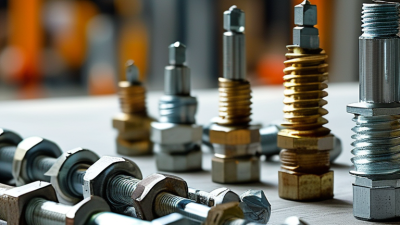
Experienced buyers should review thread size, embedment depth, pull-out capacity, shear resistance, and corrosion protection. They should also request test reports, material certificates, installation instructions, and traceable quality records. Supplier experience matters, but documented evidence matters more. Independent testing can reduce uncertainty when projects involve heavy loads or unusual substrates.
Global sourcing adds another layer of responsibility. Standards, labeling rules, packaging requirements, and inspection practices differ between markets. A product described as “heavy duty” may not provide enough technical proof. That wording alone is not reliable.
No guide can remove every purchasing risk. Product selection still depends on engineering calculations and site conditions. Even experienced teams sometimes overlook installation tools or actual concrete quality. This article aims to provide a practical starting point for comparing anchor types, suppliers, and performance requirements in 2026.
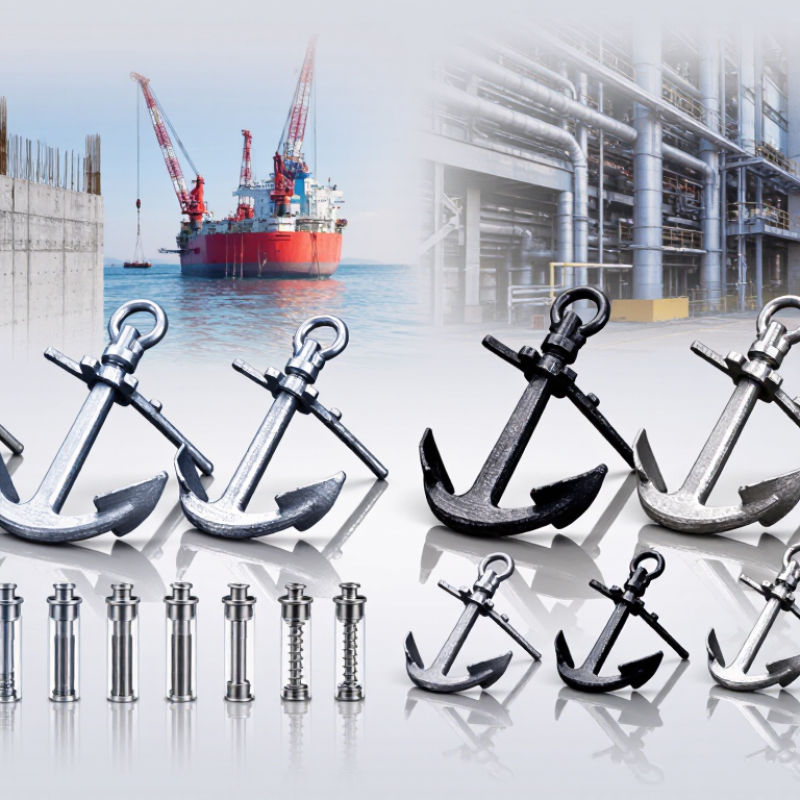
2026 Top Types of Anchors for Global Buyers
Anchor Basics and Their Role in Marine Operations
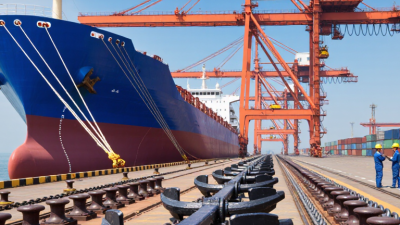
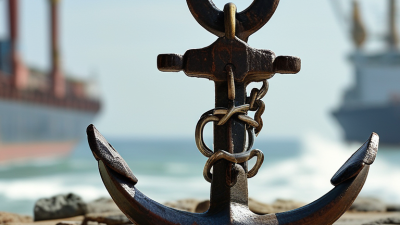
An anchor is more than a heavy steel object. It connects vessel safety with seabed conditions, weather, and crew decisions. UNCTAD’s Review of Maritime Transport 2024 reports that ships carried over 80% of global merchandise trade by volume. That scale makes dependable anchoring equipment essential in ports, offshore areas, and emergency operations.
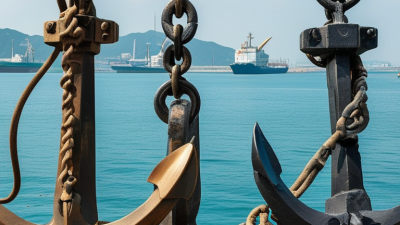
Common anchor types include stockless, high-holding-power, Danforth-style, and claw-pattern anchors. Stockless anchors suit many commercial vessels because they stow efficiently in hawse pipes. High-holding-power designs can provide stronger grip with less weight. Danforth-style anchors perform well in sand and mud, while claw-pattern anchors offer practical handling for smaller craft. No design works perfectly everywhere.
Seabed testing matters.
The International Association of Classification Societies links anchor equipment selection with vessel size, mooring loads, and classification requirements. UNCTAD also recorded global maritime trade at approximately 12.3 billion tons in 2023, showing why equipment failures can create expensive delays. Buyers should check anchor mass, fluke geometry, shank strength, chain compatibility, and corrosion protection. A larger anchor is not automatically safer. Poor seabed contact can defeat extra weight. Field inspections also reveal a common weakness: damaged connecting hardware is sometimes ignored. That mistake deserves more attention, especially before rough-weather operations.
| Anchor Type | Key Structural Features | Best Seabed Conditions | Primary Marine Applications | Main Strengths | Important Limitations | Typical Handling Profile |
|---|---|---|---|---|---|---|
| Stockless Anchor | Two pivoting flukes mounted on a heavy crown, with no permanent stock across the shank. | Firm sand, clay, and mixed seabeds where the flukes can penetrate effectively. | Commercial ships, tankers, bulk carriers, ferries, and other vessels using recessed bow hawse pipes. | Compact stowage, simple recovery, proven marine service, and compatibility with powered anchor windlasses. | Usually requires more scope and suitable seabed penetration than high-holding-power designs; performance can be weaker in very soft mud. | Designed for bow stowage in a hawse pipe; commonly handled with chain and a windlass. |
| High-Holding-Power Anchor | Streamlined flukes and a weighted or shaped crown designed to develop greater resistance after penetration. | Dense sand, stiff clay, and other bottoms that permit reliable fluke penetration. | Large merchant vessels, offshore support vessels, workboats, and vessels requiring reduced anchor mass for a specified holding load. | Higher holding capacity per unit of anchor mass than many conventional stockless designs; efficient for modern vessel layouts. | Holding performance is highly dependent on seabed type, setting technique, anchor orientation, and scope. | Often selected through classification or type-approval data and handled with standard windlass systems. |
| Admiralty Pattern Anchor | Long shank, broad fixed flukes, and a transverse stock that helps the anchor orient one fluke toward the seabed. | Sand, gravel, firm clay, and bottoms where the fluke can dig in without obstruction. | Traditional boats, sailing vessels, museum or heritage craft, and applications where strong initial penetration is valued. | Excellent initial penetration and predictable setting when correctly oriented; visually simple and robust. | The stock increases stowage requirements and can complicate recovery, deck handling, and hawse-pipe storage. | Usually requires clear deck space or a dedicated anchor davit rather than a compact recessed bow arrangement. |
| Danforth-Pattern Anchor | Long shank, wide pivoting flukes, and a stock or stabilizing bar that maintains the working orientation. | Sand and mud, especially when the broad flukes can bury deeply. | Small workboats, recreational craft, dinghies, temporary moorings, and auxiliary anchoring systems. | High holding power relative to its mass in suitable soft or sandy bottoms; easy to carry and store. | Less reliable in rock, dense weed, hard clay, and bottoms containing large stones; flukes can become difficult to release after deep burial. | Generally suited to manual deployment or light windlass systems; requires careful fluke orientation during setting. |
| Claw or Plough-Pattern Anchor | Concave, claw-like or plough-shaped body designed to roll into a stable position and penetrate the seabed. | Sand, mud, gravel, and mixed bottoms with moderate penetration potential. | Powerboats, cruising vessels, service craft, and general-purpose anchoring where changing wind or tide is expected. | Good self-setting behavior, broad suitability across common seabeds, and relatively easy retrieval. | May provide less maximum holding efficiency in very soft mud than wide-fluke designs; performance varies considerably with geometry. | Convenient for bow rollers and compact deck arrangements; normally handled with chain or rope-chain rode. |
| Mushroom Anchor | Large, rounded concave head attached to a central shank; holding is created mainly by suction and embedment. | Soft mud and silt where the head can gradually settle and bury. | Permanent or semi-permanent moorings, buoys, small floating platforms, and sheltered-water installations. | Very stable after embedment in suitable soft sediment and practical for long-term mooring systems. | Not intended for rapid deployment or frequent relocation; poor choice for rocky, hard, or highly exposed seabeds. | Usually installed with lifting equipment or workboats rather than routine hand deployment. |
| Grapnel Anchor | Multiple narrow arms or hooks extending from a central shank, sometimes with folding or detachable arms. | Rock, coral, rubble, and areas where the arms can catch on underwater projections. | Small boats, tenders, kayaks, lightweight workboats, and temporary holding near rocky shorelines. | Compact, lightweight, and capable of catching on irregular hard surfaces where fluke anchors may not penetrate. | Holding depends on snagging rather than controlled burial; it can foul underwater structures and may be difficult to recover. | Normally deployed and recovered manually; not generally selected as the primary anchor for large vessels. |
| River or Barge Anchor | Heavy, robust construction with flukes or broad arms configured for strong initial bite in current-affected waterways. | River mud, sand, gravel, and mixed bottoms subject to current and vessel movement. | Barges, inland cargo vessels, floating construction equipment, and river service craft. | Built for repeated setting, high loads from current, and rugged handling in confined waterways. | Designs are highly application-specific; a suitable anchor must account for current velocity, water depth, barge profile, and bottom type. | Often paired with powered winches, chain cable, and dedicated deck handling equipment. |
| Drag-Embedment Mooring Anchor | Long, narrow flukes or plates designed to penetrate progressively as the anchor is dragged under controlled tension. | Sand, soft clay, and cohesive seabeds capable of sustaining deep embedment. | Offshore mooring systems, floating production units, floating wind infrastructure, and long-term station keeping. | Can achieve substantial holding capacity through deep penetration and is suitable for permanent mooring arrangements. | Requires adequate seabed area for installation and may be unsuitable for hard rock, very dense soil, or locations with buried obstructions. | Installed with anchor-handling vessels, towing equipment, and carefully controlled tensioning procedures. |
Selection should be based on vessel displacement, windage, current, water depth, expected holding load, seabed investigation, chain or rope scope, and the applicable marine or classification requirements. Actual holding capacity varies with anchor geometry, mass, soil properties, installation method, and environmental conditions.

 Phone
Phone Send Email
 whatsapp
 Facebook
 Youtube